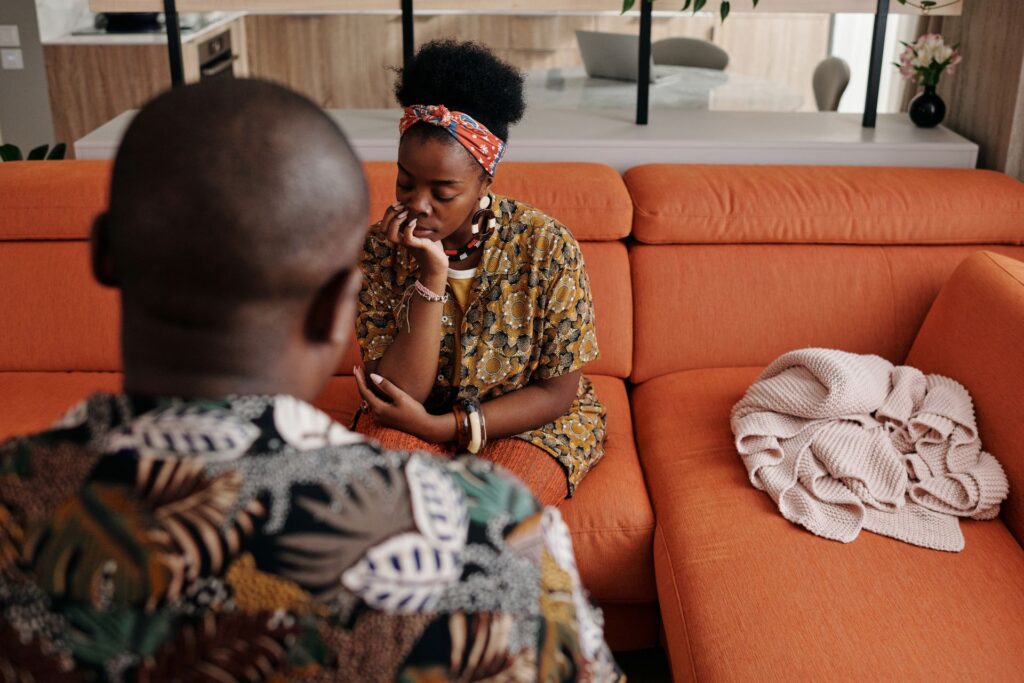


There is a particular exhaustion that comes from walking into a room and knowing, before you’ve said a word, that you’re going to have to spend the next few minutes helping someone understand your world before they can help you with your problem.
I know that exhaustion. I’ve felt it personally. And I’ve watched it play out in session after session with Black and BIPOC women who came to me after feeling misunderstood in other settings. Women who were smart, accomplished, and self-aware, who often shared how meaningful it was to work with a therapist who understood many of the cultural experiences that shaped their lives.
That was the gap I built this practice to close.
What "Culturally Competent" Actually Has to Mean
Culturally competent care has become a phrase that practices put on their websites. I understand why. But I want to be specific about what it actually means, because there’s a version of cultural competency that is academic, and a version that is lived.
The academic version: a therapist has completed trainings, understands the impact of racial trauma, has read the research on mental health disparities, and recognizes the importance of providing culturally responsive care.
The lived version: your therapist understands that your cultural identity, family values, and life experiences may shape how you view yourself, your relationships, and even your willingness to ask for help. She recognizes that experiences such as anxiety, stress, perfectionism, or emotional exhaustion don’t exist in a vacuum – they’re often influenced by the expectations, messages, and roles you’ve carried throughout your life. She doesn’t assume your story, but she also doesn’t need you to convince her that your experiences matter. She understands that conversations around mental health, family, strength, vulnerability, and healing can look different across cultures, and she creates space for those experiences to be explored with curiosity, respect, and compassion.
That second version is what I set out to build at Knew You Psychotherapy.
Our team is made up of therapists of color, and that diversity is an intentional part of who we are. While we know every person’s story is unique, we also understand that feeling seen, respected, and culturally understood can create a stronger foundation for trust, connection, and healing.
Why BIPOC Women Often Wait Too Long
According to studies, Black Americans are less likely to receive mental health treatment than white Americans, and when they do seek care, they’re significantly more likely to encounter providers who lack the cultural competence to serve them well. NAMI reports that only one in three Black adults who need mental health care actually receives it.
These aren’t just statistics. I have sat with so many Black and BIPOC women who waited years before coming to therapy. Women who knew something was wrong, who could see the patterns, feel the weight, sense that their relationship dynamics or their exhaustion had roots deeper than they wanted to admit, and who still didn’t call.
When I ask why, the reasons are layered.
Sometimes it’s the cultural script about strength. “We don’t do therapy. We pray. We push through. We handle it.”
Sometimes it’s the fear of what getting honest would cost.
If you name the ways your childhood hurt you, does that mean betraying your family? Does it mean you’re weak? Does it mean everything you’ve built was a coping mechanism?
Sometimes it’s the exhaustion of anticipating being misunderstood. It takes so much energy to seek help from a system that has historically failed Black people, to trust that this person, this therapist, this space is actually safe.
And sometimes it’s simply the belief, buried but persistent, that you don’t deserve to take up space with your pain. Other people have real problems. You’re doing well, on paper.
I want to speak directly to that last one, because I hear it most often from the women I most want to reach.
Doing well on paper is not the same as doing well inside. You don’t have to earn the right to your own healing.
What the First Session Looks Like At Knew You
I designed our intake process intentionally because I believe every person’s story deserves to be understood within the context of their unique experiences, relationships, culture, and values. Healing is never one-size-fits-all, and neither is the way we get to know our clients.
When you reach out to Knew You Psychotherapy, your first conversation is with one of our associate therapists. A real conversation, not a form. They’re listening not just for what you’re struggling with, but for who you are: your background, your context, your patterns, what you’ve already tried to do to heal.
From that conversation, they match you with the right therapist. Not just whoever has an opening. The right one: someone whose specialty, approach, and lived experience creates the conditions for the real work.
By the time you sit down with your therapist, you’re not starting from zero. You’ve already begun building a connection, making it easier to focus on your experiences, your goals, and the healing you came to do.
You just get to start.
The Work We Do At Knew You Psychotherapy
The women I work with are not fragile. They are some of the most capable, self-aware, hard-working people I know.
What they need is not to be managed or just to be told to do breathing exercises. What they need, what I believe most high-achieving BIPOC women need, is a space to finally stop performing.
To put down, for an hour, the competence and the composure and the not-letting-anything-show.
To trace the patterns, in relationships, in how they see themselves, in their bodies, in their compulsive productivity, back to where they actually started.
Not because the past is more important than the present, but because you cannot change what you haven’t named.
That is the work I am most passionate about: helping Black and BIPOC women understand that the way they survived their childhoods was brilliant, and that they no longer have to live there. That the hypervigilance, the over-functioning, the emotional armor, those were adaptations, not character traits. And adaptations can change.
I’ve watched women walk out of this work with a different relationship to rest. A different relationship to vulnerability. A different relationship to love, including their own. That transformation is what our different services are built around.
That is why I built this practice.
If You've Been Thinking About It
If you’ve been considering therapy and have hesitated because you weren’t sure you’d be understood, because you weren’t sure you deserved it, because you weren’t sure it would actually help, I want you to know that those hesitations make complete sense.
And I also want you to know that this practice exists specifically for the version of you that is tired of explaining yourself before the real work can begin.
You don’t have to come in with a diagnosis or a story that fits a textbook. You just have to be willing to look honestly at what you’re carrying and what you want your life to actually feel like.
The rest, we figure out together.
Book your free 15-minute consultation, a real conversation about what’s brought you here, with no pressure and no clinical intake forms.